America Amplified: Election 2020
Your voice counts
See the episodes
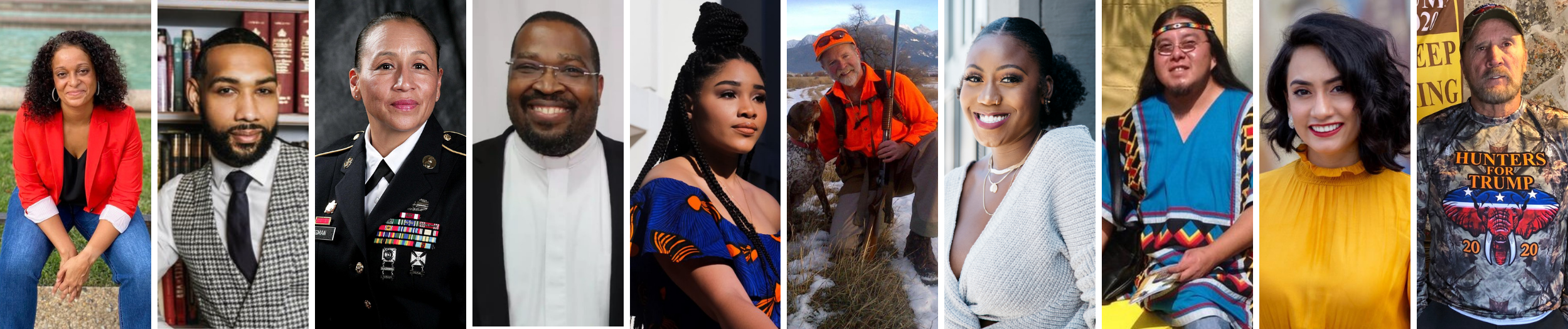
America Amplified: Election 2020 is a national talk show that will dive into the challenges facing America before and after election day on November 3.

This six-part, one-hour weekly talk show is available to stations on Saturdays, October 10 – November 14 on PRSS.
Award-winning journalist Rose Scott, with WABE in Atlanta, will host the show joined by co-hosts from across the country.
America Amplified: Election 2020 explores local community perspectives, with a mission to foster dialogue, not debate; share experiences; and elevate diverse voices.
Episodes are driven by the topics and issues raised during virtual listening sessions with people from across the country — from rural communities in the Mountain West and small towns in Pennsylvania, to coal country in West Virginia and Wyoming, as well as Atlanta, Florida, and across the Midwest.
The topics are also informed by reporting from America Amplified’s partner network.
As part of our talk show run, we held two listening sessions: On October 27, the Tuesday before election day, and November 10, the Tuesday after. Below are the weekly show themes.
Connect with us on social media to share your experiences and feedback: Twitter, Facebook or Instagram.
Show dates, hosts and themes


October 10
Theme: What divides us?
Hosts: Rose Scott of WABE and John Dankosky of New England Public Media
Racism and racial injustice are among many issues dividing us this year. We also see deep divisions in how we’re experiencing and responding to the pandemic and the ongoing environmental crises from the West Coast to the gulf states. Have we reached a boiling point? Where do we go from here? And what does this division mean in the midst of this election season?
October 17
Theme: Who has access to the “American Dream” today?
Hosts: Rose Scott of WABE and Kavitha George of Alaska Public Media
For some, the quest for the American Dream is alive and fruitful. For others, it seems practically unattainable. What benefits, challenges and inequities exist for communities when it comes to things like health care, voting access and taxes? And how do differences affect our views of America and its future?
October 24
Theme: Do you see yourself and your community represented in national media coverage?
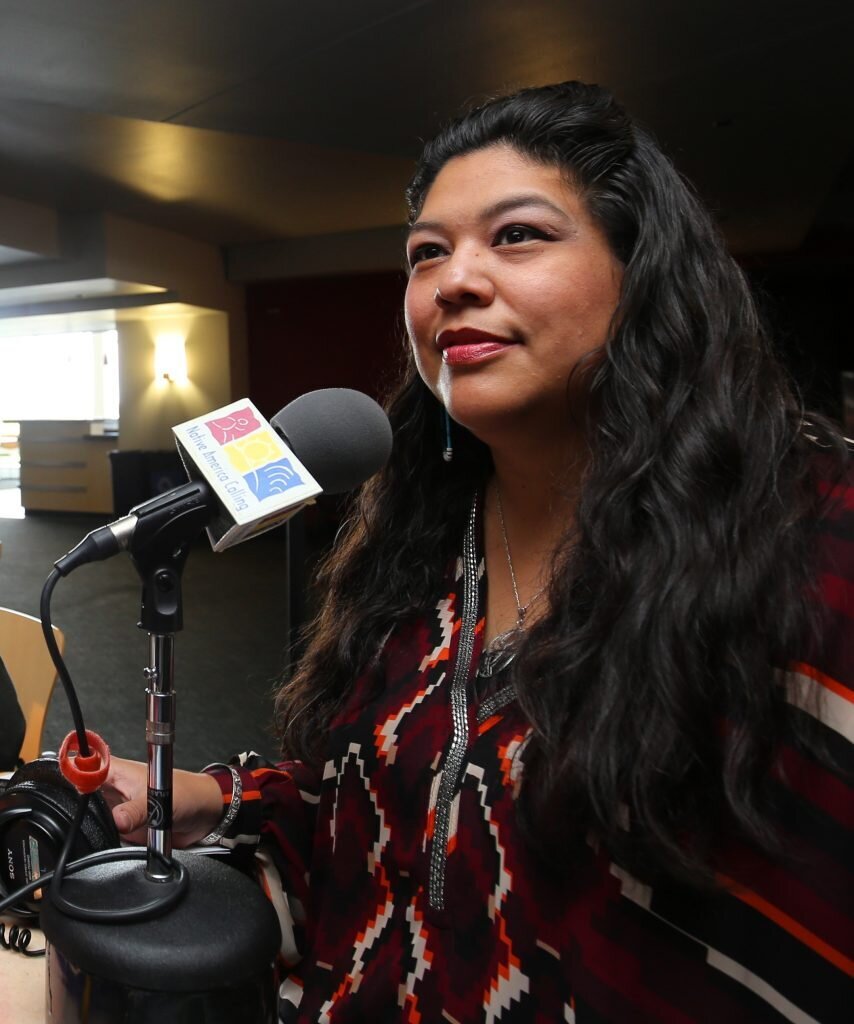
Hosts: Rose Scott of WABE and Tara Gatewood, Native America Calling
When it comes to election coverage, we hear a lot about the candidates and the horse race. As we barrel toward the November 3 vote, what’s been missing from national coverage this election season? Do you feel represented? Do we have the information we need and can trust as we cast our ballots?
October 31
Theme: How are you showing up for your community?
Hosts: Rose Scott of WABE and Luis Hernandez, WLRN in Miami
With co-hosts from the battleground states of Georgia and Florida, we’ll hear how this election has affected communities across the country. Aside from voting, how are we engaging for change at a local level?
November 7
Theme: How do you feel about the country and democracy after the election?
Hosts: Rose Scott of WABE and Charity Nebbe, Iowa Public Radio
It’s our first weekend post election. We’ll invite guests from previous episodes to reflect on what voting meant this year, and how their communities are reacting in the aftermath.
November 14
Theme: What’s next? How can we rise above, or learn to live with our divisions?
Hosts: Rose Scott of WABE and Ariana Proehl, KQED in San Francisco
As we near the end of a tumultuous 2020, is there an opening for mutual understanding despite our differences? And how can we get there, especially in the aftermath of a contentious election? This show will explore what we’ve lost and gained, what we’ve learned and how we will move forward into 2021.
Stations carrying the show to date
NORTHEAST
WXXI (Rochester, New York), 3 p.m. ET, Saturdays
WLIW (Long Island, New York), 2 p.m. ET, Sundays
WRVO (Oswego/Syracuse, New York), 6 p.m. ET, Saturdays
VPR (Vermont), 8 p.m. ET, Mondays
The Public’s Radio (Rhode Island), 4 p.m. ET, Saturdays
NEPM (Springfield, Massachusetts), 8 p.m. ET, Mondays
WNPR (Hartford, Connecticut), 4 p.m. ET, Sundays
NHPR (New Hampshire), 1 p.m. ET, Mondays
MID-ATLANTIC
WITF (Harrisburg, Pennsylvania), 4 p.m. ET, Saturdays
WESA (Pittsburgh, Pennsylvania), 3 p.m. ET, Saturdays
WHYY (Philadelphia, Pennsylvania), 4 p.m. ET, Saturdays
SOUTH
WABE (Atlanta, Georgia), 4 p.m. ET, Saturdays
WFPK (Louisville, Kentucky)
WKMS (Murray, Kentucky)
WFAE (Charlotte, North Carolina), 1 p.m. ET, Saturdays
KPSQ (Fayetteville, Arkansas), 2 p.m. CT, Sundays
WPLN (Nashville, Tennessee), 4 p.m. CT, Saturdays
KOSU (Oklahoma City, Oklahoma), 3 p.m. CT, Sundays
FLORIDA
WMFE (Orlando), 4 p.m. ET, Saturdays
WUSF (Tampa), 3 p.m. ET, Sundays
WLRN (Miami), 4 p.m. ET, Saturdays
MIDWEST AND TEXAS
WCPN (Cleveland, Ohio), 6 a.m. ET, Sundays
WYSO (Dayton, Ohio)
KCUR (Kansas City, Missouri), 3 p.m. CT, Saturdays
St. Louis Public Radio, KWMU (St. Louis, Missouri), 2 p.m. CT, Saturdays
KRCU (Southeast Missouri) 3 p.m. CT, Saturdays
Iowa Public Radio (Des Moines, Iowa), 2 p.m. CT, Sundays
WILL (Illinois Public Media), 9 p.m. CT, Sundays
WQJC (Quincy, Illinois)
WFYI (Indianapolis, Indiana), 3 p.m. ET, Sundays
KRPS (Bartlesville, Kansas)
HPPR (High Plains region of Kansas, Colorado, Texas and Oklahoma panhandles), 7 p.m. CT, Saturdays
WUWM (Milwaukee, Wisconsin), 3 p.m. CT, Saturdays
MPR (Minneapolis, Minnesota), 7 p.m. CT, Saturdays
KAXE/KBXE (Northern Minnesota), 6 p.m. CT, Sundays
WGZS (Fond du Lac, Minnesota), 2 p.m. CT, Saturdays
NET (Nebraska), 7 p.m. CT, Mondays
KERA (Dallas, Texas), 3 p.m. CT, Saturdays
WEST
Boise State Public Radio, KBSU (Boise, Idaho), 2 p.m. MT, Saturdays
Aspen Public Radio (Colorado) 7 p.m. MT, Saturdays
KWLP (Peach Springs, Arizona)
KJZZ (Phoenix, Arizona) 1 p.m. MT, Saturdays
KNPR (Las Vegas, Nevada) 1 p.m. PT, Saturdays
KGLP (Gallup, New Mexico)
CALIFORNIA
KQED (San Francisco, California), 1 p.m. PT, Saturdays
KCLU (Santa Barbara), 1 p.m. PT, Saturdays
KPBS (San Diego), 2 p.m. PT, Saturdays
CapRadio (Sacramento), 8 p.m. PT, Mondays
KEBF/KZSR (San Luis Obispo)
ALASKA
KTOO (Juneau), 11 a.m. AK, Saturdays
KSKA (Anchorage), 10 a.m. AK, Mondays
KYUK (Yukon-Kuskokwim Delta)
KIYU (Galena), 1 p.m. AK, Saturdays
Core team
Executive directors: Donna Vestal and Alisa Barba
Senior producer and director: Andrea Tudhope
Operations manager: Jennifer Tufts
Assistant producer: Mayowa Aina, Alaska Public Media
Community engagement directors: Ann Alquist and Matthew Long-Middleton
Digital and social media editor: Kathy Lu
Advisory committee: Ron Jones, program director, KCUR; Abby Goldstein, PRPD president; Rick Holter, VP of news, KERA; Stephen Becker, senior producer, KERA; Art Hughes, executive producer, Koahnic Broadcast Corp.; Monica Braine, senior producer, Native America Calling; Ernesto Aguilar, program director, National Federation of Community Broadcasters; John Haas, director of radio and television at Public Broadcasting Atlanta (WABE); Breeze Richardson, formerly WBEZ-Chicago, now communication director at Kemper Museum of Contemporary Art; Brian Bull, reporter, KLCC
Technical support: Chris Prewitt and Stephen Steigman of KCUR in Kansas City
Distribution support: Native Voice One