
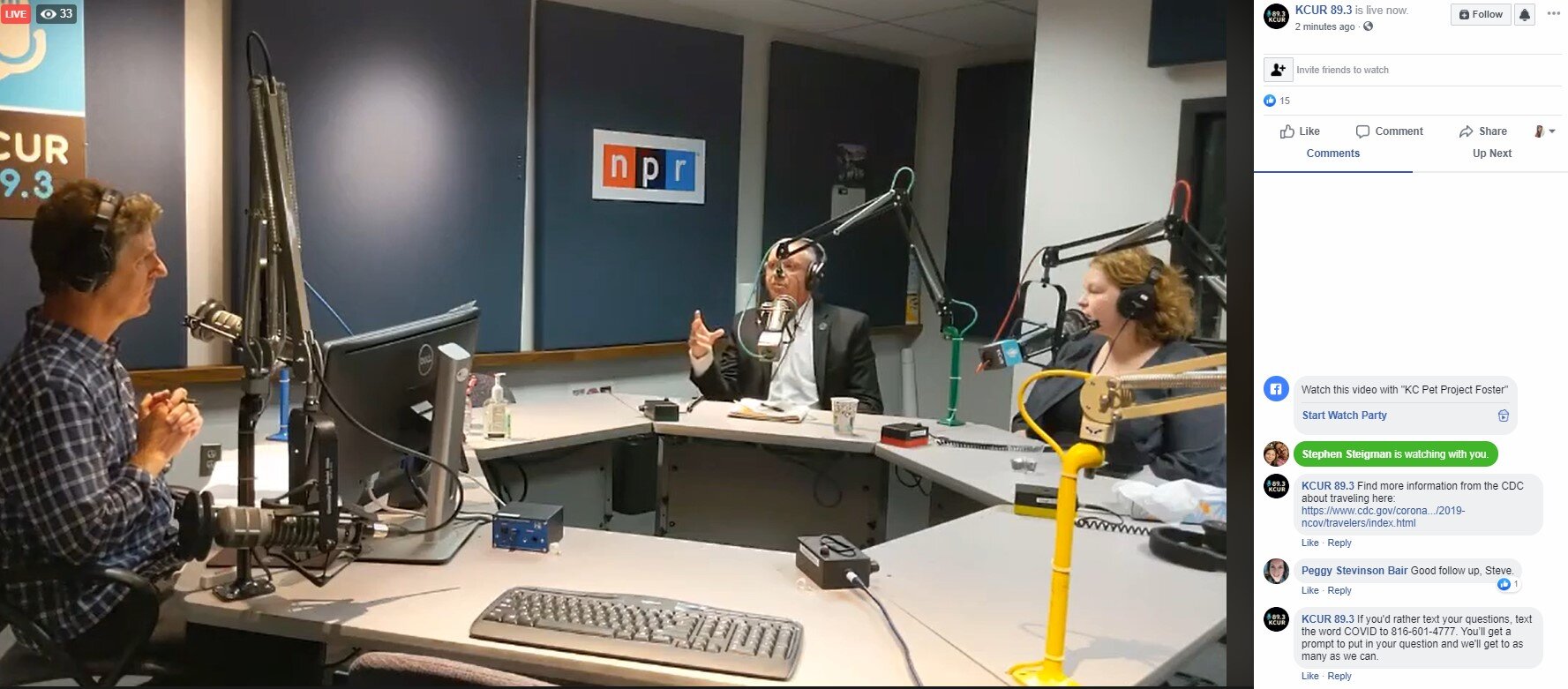
Talk shows offer a great platform to engage with your audience, especially now, as we strive to continue to connect during a pandemic. Here are some ways to maximize your reach and broaden your audience.
Know your audience
Clarify who you are trying to reach to boost your engagement tactics.
- E.g. parents of children in K-12. A good chance to use social and online tools: Ask the school administration to help reach parents; find Facebook page groups; schools have newsletters. (Vermont Public Radio does this excellently with their podcast But Why?)
- E.g. immigrant and refugee diasporas. Lean on existing partnerships – or develop new ones with local nonprofits – to find out how to best connect. Use those channels to get out the message about your show. You may need to make phone calls, send mailers and/or get materials translated.
- E.g. people thrust onto the front line of public health: janitors, garbage removers, burial service providers, baristas. Search social media (try Twitter advanced search or Facebook keyword search) to find and connect with local people in these jobs. Pro tip: Search “I” and “coffee” or “I” and “garbage” to increase chances of finding first-person stories.
Make it easy for people to reach you
- Post a story on your site with details about the show topic and how to submit comments or questions ahead of the show.
- If you use a texting service, such as GroundSource or Public Input, ask people to text comments/questions to you. (Side Effects Media, in partnership with WFYI, has used Public Input to build their texting club and drive WFYI’s talk show, All In.)
- If you use Hearken, embed a form with questions.
- You can also embed a Google form to solicit contact info and questions. (See this example from KCUR.)
- Ask people to send an email or leave a voicemail. If soliciting email, be sure to direct people to fill out the subject line with “Covid K-12” or something that would help you organize the messages.
- Promote, promote, promote
- For social media posts: Your perspective matters. <Station name/name of collaborative> What is the impact of coronavirus on you or your community? Text xxxxx with your questions, and we’ll answer them.
- For broadcast promos (customized for each partner station): Shape our coverage of coronavirus. Ask your questions by leaving us a voicemail at XXX-XXX-XXXX and we will answer them on Friday, March 27 on a special call-in show.
How to work with online groups
Neighborhood associations have listservs; faith communities have Facebook groups; sports leagues have email lists. These are robust streams of online communication that you could tap into by forming partnerships. Partners can collaborate in a few different ways:
- Share your call out for questions on their pages, listservs, emails, etc.
- In your on-air promos, reference your partnership with the organization.
- We’re working with <name of partner> to shape our coverage of coronavirus. Go to our website at xxxx.org to submit your questions or text us at xxxxx.
- Collaborate with other media to solicit questions. You can potentially broker a trade for airtime or ad space.
The more transparent, the better
- Have both your news director and general manager cut spots talking about why they believe in this approach and inviting people to ask their questions. If you’re at a community license, enlist your board members and community advisory board members. They are your ambassadors and community connectors as well.
- Mention the approach in your station’s newsletter, and in your publication if you have one.
- Produce a two-way to share what you’re learning through this coverage.
Finally, remember to share your successes and challenges with us! We’re here for you.


